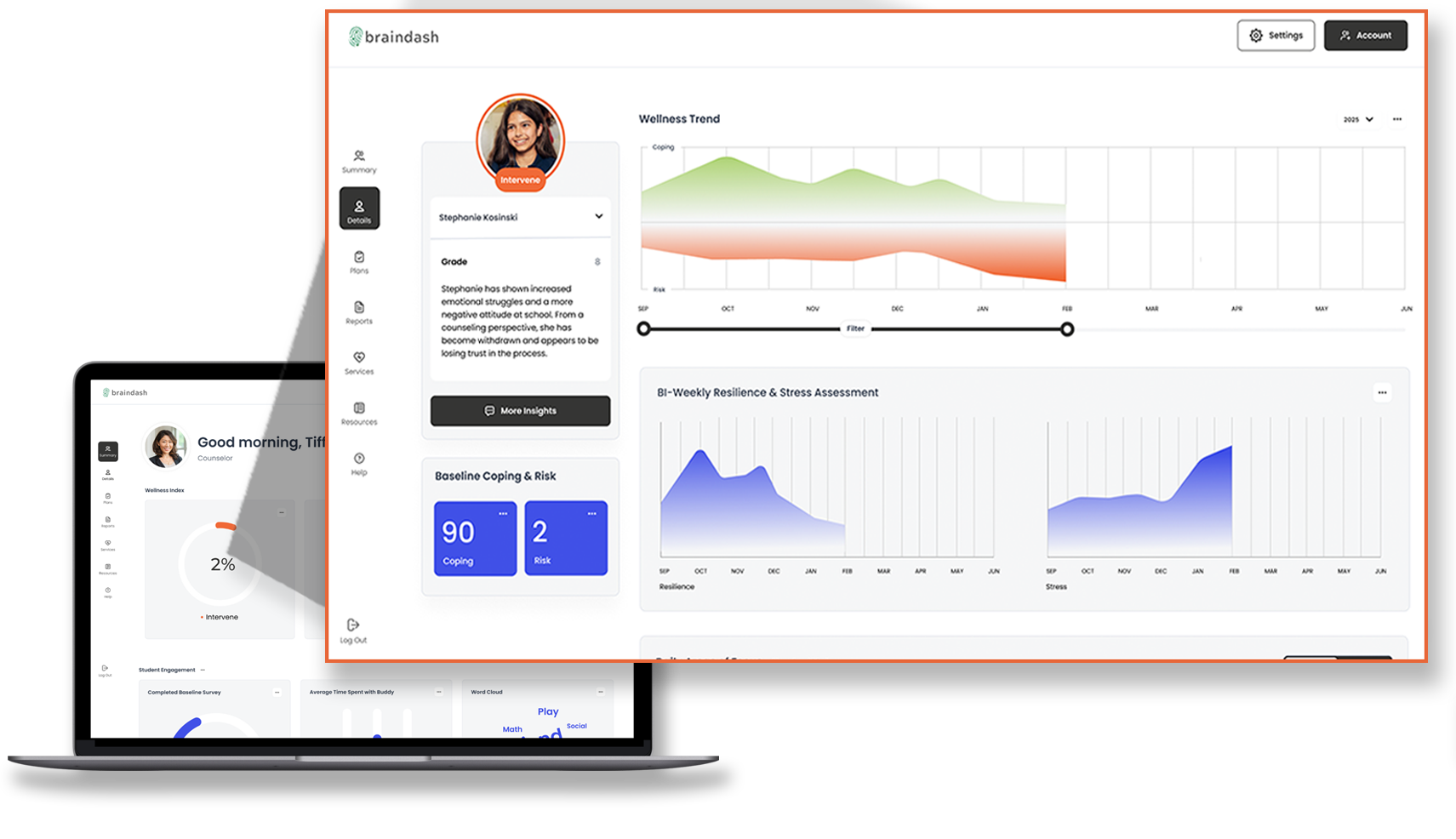
A clearer way for schools to see change over time
BrainDash brings social, emotional, and behavioral patterns into one shared view, helping counselors and school leaders prioritize calmly and act with confidence.
Why BrainDash?
What Makes BrainDash Different?
BrainDash is the only platform designed to surface patterns in student well-being by combining multiple school-based signals, rather than relying on a single check-in or survey.
It brings together signals schools already have:
-
student self-reported input
-
attendance patterns
-
schedules and daily rhythms
-
academic indicators like grades
-
change over time, not isolated events
This layered view helps schools see emerging social, emotional, and behavioral patterns earlier, with less noise.
BrainDash does not label students or make determinations. People decide.
Supported by our Trust & Safety standards, including COPPA-aligned data practices.
How BrainDash Creates Earlier Visibility
Looking across multiple signals over time allows patterns that might otherwise stay hidden to take shape.
Support teams can see:
-
where change is building gradually, not just spiking suddenly
-
which students may need attention sooner, not later
-
how different signals relate, instead of living in separate systems
Earlier visibility does not mean faster action.
It means more time to decide well.
From Patterns to Priorities
The Counselor Dashboard translates patterns over time into shared priorities for student support teams.
Counselors see where students are steady, where change is emerging, and where closer attention may be helpful. This population-level view helps teams align quickly and avoid reacting to noise.

BrainDash organizes this insight into a simple, shared model of attention:
Observe
Patterns appear steady and supported. This helps schools maintain what’s working and reinforce conditions that support engagement, connection, and learning.
Monitor
Patterns show emerging change over time. This signals where closer attention may be helpful, without requiring immediate action.
Intervene
Patterns suggest focused, timely support may be appropriate, guided by counselor judgment and school-defined processes.
These are not labels or decisions. They indicate levels of visibility that help counselors prioritize attention thoughtfully.
BrainDash supports professional judgment. It does not define students, predict outcomes, or prescribe action.
Student Check-Ins Designed for Trust and Safety
Brief, structured check-ins delivered through a school-controlled chat experience

BrainDash uses short, structured student check-ins to capture how students are doing over time. These check-ins are designed to fit naturally into the school day and provide consistent input without relying on long surveys or one-time assessments.
The experience adapts by developmental stage, beginning in elementary grades and extending through high school, with age-appropriate language and interaction.
Intentionally limited by design
The check-in experience follows clear boundaries defined by the school. It is designed to be predictable, appropriate, and supportive, while remaining structured and focused.
-
Uses a conversational format without providing therapy, interpretation, or advice
-
Does not prompt disclosure beyond what the school has defined as appropriate
-
Supports consistency and routine, rather than emotional escalation
Guided by established best practices
The design of BrainDash check-ins is informed by established guidance in youth well-being, including resources from the American Psychological Association and the JED Foundation.
Within these guardrails, AI and machine learning help identify patterns across responses over time, supporting earlier visibility while keeping human judgment at the center.
BrainDash looks beyond single moments by combining multiple check-ins over time. This helps schools distinguish meaningful change from everyday ups and downs.
BrainDash does not provide advice, diagnosis, or real-time intervention. Human judgment remains central at every step.
The difficult realities schools are navigating today
From real conversations with school leaders, counselors, and student life teams.
There’s no place to put things together - surveys, observations -they’re all in different places, so I have to compile them all before check-ins.
Even with strong SEL programs, we’re still missing kids. A tool that spots the invisible ones early is exactly what schools need.
If I had earlier signals, I could offer tools and support before things escalate. I could go from reacting to actually preventing.”
We’re often reacting, not preventing. If this helps us shift, that’s meaningful.
There’s just not enough we do for kids in this area. We’re trying everything from therapy dogs to morning check-ins...to help them feel seen. I’m glad you’re building something like this.
Everything becomes a crisis. My day gets derailed constantly. If I had something that flowed multiple data points easily to me, that would absolutely make my job easier.
We have all this data—attendance, grades, behavior—but we don’t have time to connect the dots. That’s where something like BrainDash becomes powerful. If it can help us catch students before they’re in crisis, that’s not just helpful - it’s essential.
We’re always playing catch-up. If something can help us get ahead and get kids help when they need it, that’s the game-changer.
Middle schoolers do not want to ask teachers for permission to see me. They don’t want to be singled out, so they don’t come.
I could actually organize my day, spend more time in classrooms, build relationships, and observe more.